
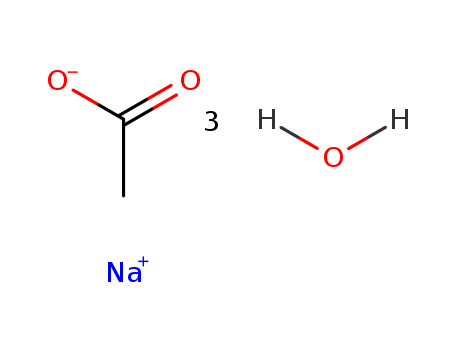
- Product Name Sodium acetate trihydrate
- cas 6131-90-4
- purity 99%

Pharmaceutical
Purity 99% Min Sodium acetate trihydrate 6131-90-4 Spot Supply with Safe Transportation
- Molecular Formula: C2H3NaO2.3(H2O)
- Molecular Weight: 136.08
- Appearance/Colour: white to colourless crystals or powder
- Melting Point: 58 °C
- Boiling Point: 117.1 °C at 760 mmHg
- PKA: 4.76 (acetic acid)(at 25℃)
- Flash Point: 40 °C
- PSA: 67.82000
- Density: 1,45 g/cm3
- LogP: -1.43670
Sodium acetate trihydrate(Cas 6131-90-4) Usage
|
History and Development |
Research on SAT dates back to 1866 when its melting point was determined. [1] |
|
Production Methods |
SAT is synthesized through chemical processes involving the reaction of sodium hydroxide with acetic acid, followed by crystallization to obtain the trihydrate form. [2] |
|
General Description |
Sodium acetate trihydrate can be obtained from the crystallization of sodium acetate in water. On heating at 75°C, it melts, while on heating above 120°C it loses water of crystallization and gets converted into anhydrous form. The hyperfine proton and 13C splittings have been evaluated by recording ESR spectra of its irradiated single crystals. ESR studies suggested the existence of trapped methyl radicals. Its crystals are monoclinic and its crystal structure has been investigated by photographic methods. Unit cell parameters were evaluated. |
|
Pharmaceutical Applications |
Sodium acetate is used as part of a buffer system when combined with acetic acid in various intramuscular, intravenous, topical, ophthalmic, nasal, oral, otic, and subcutaneous formulations. It may be used to reduce the bitterness of oral pharmaceuticals. It can be used to enhance the antimicrobial properties of formulations; it has been shown to inhibit the growth of S. aureus and E. coli, but not C. albicans in protein hydrolysate solutions. It is widely used in the food industry as a preservative. Sodium acetate has also been used therapeutically for the treatment of metabolic acidosis in premature infants, and in hemodialysis solutions. |
|
Biochem/physiol Actions |
Sodium acetate trihydrate (SAT) is a phase change material (PCM) that can be easily combined with the preparation of domestic hot water, space heating, solar heating, and radiant floor heating systems. The hydrated salt of SAT possesses high latent heat density and thus can be used for low-temperature heat storage. |
|
Safety |
Sodium acetate is widely used in cosmetics, foods, and pharmaceutical formulations, and is generally regarded as a nontoxic and nonirritant material. A short-term feeding study in chickens with a diet supplemented with 5.44% sodium acetate showed reduced growth rates that were attributed to the sodium content.(9) Sodium acetate is poisonous if injected intravenously, is moderately toxic by ingestion, and is an irritant to the skin and eyes. LD50 (rat, oral): 3.53 g/kg LD50 (mouse, IV): 0.38 g/kg LD50 (mouse, SC): 8.0 g/kg |
|
storage |
Sodium acetate should be stored in airtight containers. |
|
Incompatibilities |
Sodium acetate reacts with acidic and basic components. It will react violently with fluorine, potassium nitrate, and diketene. |
|
Regulatory Status |
GRAS listed. Accepted as a food additive in Europe. Included in the FDA Inactive Ingredients Database (injections, nasal, otic, ophthalmic, and oral preparations). |
InChI:InChI=1/C2H4O2.Na.3H2O/c1-2(3)4;;;;/h1H3,(H,3,4);;3*1H2/q;+1;;;/p-1
6131-90-4 Process route
-
-
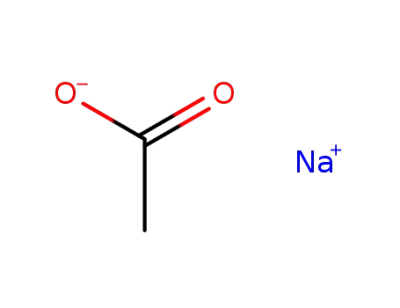
127-09-3
sodium acetate

-
-
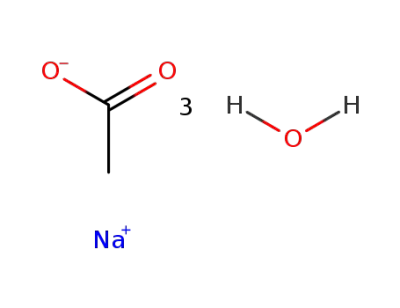
6131-90-4
sodium acetate trihydrate
Conditions
| Conditions | Yield |
|---|---|
|
With
water;
In
neat (no solvent);
formation of supersaturated soln. via H2O uptake, solidification after contact with solid materials and slow formation of NaCH3CO2*3H2O;;
|
|
|
With
water;
in moist air at ambient temp.;;
|
|
|
With
H2O;
in moist air at ambient temp.;;
|
|
|
With
H2O;
In
neat (no solvent);
formation of supersaturated soln. via H2O uptake, solidification after contact with solid materials and slow formation of NaCH3CO2*3H2O;;
|
-
-
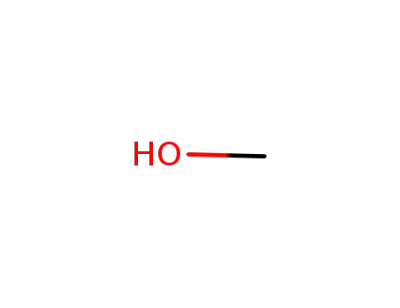
67-56-1
methanol

-
-
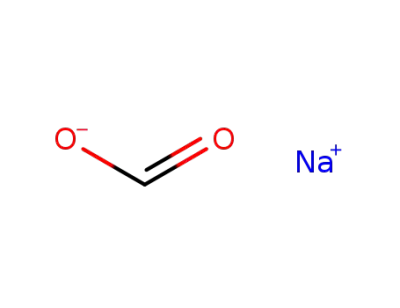
141-53-7
sodium formate
-
-
6131-90-4
sodium acetate trihydrate
Conditions
| Conditions | Yield |
|---|---|
|
With
water;
In
neat (no solvent);
heating NaHCO2 in autoclave to 200 to 300°C unnder pressure in presence of little H2O while treating with CH3OH vapor;;
|
|
|
With
H2O;
In
neat (no solvent);
heating NaHCO2 in autoclave to 200 to 300°C unnder pressure in presence of little H2O while treating with CH3OH vapor;;
|
|
|
With
water;
In
neat (no solvent);
heating NaHCO2 in autoclave to 200 to 300°C unnder pressure in presence of little H2O while treating with CH3OH vapor;;
|
6131-90-4 Upstream products
-
64-19-7
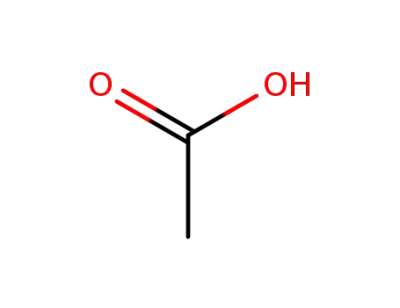
acetic acid
-
127-09-3
sodium acetate
-
7732-18-5
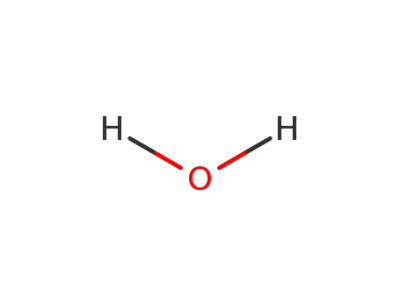
water
-
7647-14-5
sodium chloride
6131-90-4 Downstream products
-
74-84-0
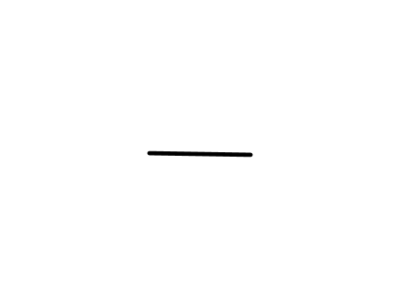
ethane
-
74-85-1
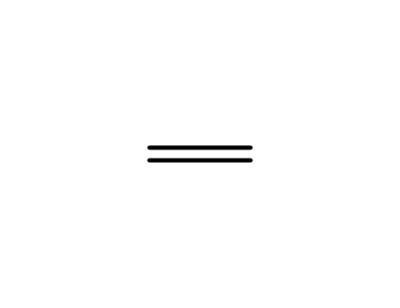
ethene
-
108-24-7
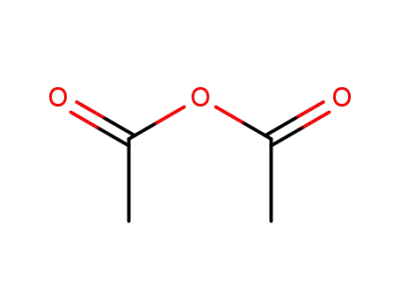
acetic anhydride
-
138555-65-4
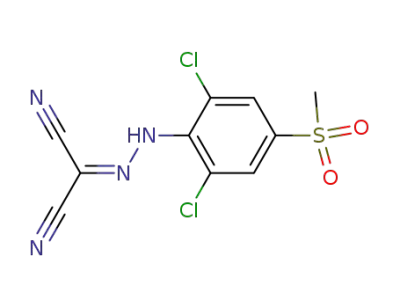
[(2,6-(dichloro)-4-(methylsulfonyl)-phenyl)hydrazono]propanedinitrile

The order has been successfully placed. Our staff will contact you within 24 hours.